Greenwich Nautical Walk:
This small but wonderful place, Greenwich can be seen in a single day. The best part is that you can walk through the whole town. This is a circular walk. To see Greenwich start from the Greenwich Pier.
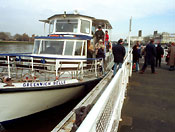
Arriving at the Pier, start wailking alongside the river towards the dome-topped building.
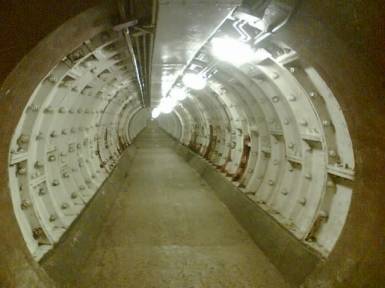
Greenwich Foot Tunnel Built in 1899,The Greenwich foot tunnel is a pedestrian tunnel crossing beneath the River Thames in East London, linking Greenwich with the Isle of Dogs.
The circular entrance buildings are similar both sides of the river and contain a lift and a long spiral flight of stairs. The tunnel is a convenient link between Greenwich town centre on the southern side and Island Gardens on the north, a park on the southern tip of the Isle of Dogs.
The tunnel is 370 metres long and 15 metres deep. The echos created by the sounds of fellow walkers entering the tunnel make for a very eerie experience.
It is open 24 hours daily but the lifts only run from 7am to 7pm on weekdays and Saturdays, 10am-5.30pm on Sundays, with no service on Christmas Day or Boxing Day.
|
 |
|
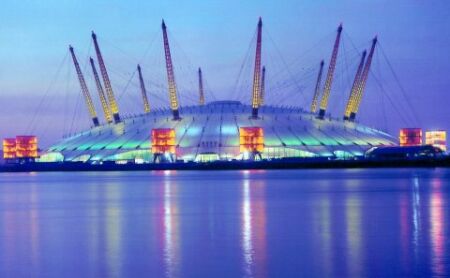
Millennium Dome: Across the river, you can see the World's biggest dome which is built on the Meridian Line (The Prime Meridian of the World) in Greenwich, originally used to house the Millennium Experience, a major exhibition celebrating the beginning of the third millennium.
The Dome structure is the largest domed structure in the world. Externally it appears as a large white marquee with twelve 100 m-high yellow support towers, one for each month of the year, or each hour of the clock face, representing the role played by Greenwich Mean Time.
|
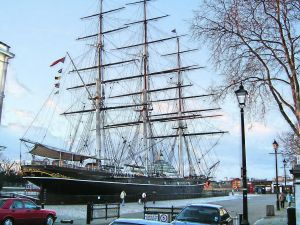
Walk to the centre of the town. Look at the Cutty Sark ship
|
Cutty Sark:
The Cutty Sark is a clipper ship. Built in 1869, she served as a merchant vessel (the last clipper to be built for that purpose). It has been in dry dock since 1954.
It was damaged in a fire on 21 May 2007 while undergoing extensive restoration. The Cutty Sark re-opened after five years, on 25 April 2012.
Walk along the Church Street and go left into the Market
|
 |
|
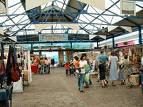
Greenwich Market :
This wonderful, quaint market has been around since the 14th century. The history of the present market dates from 1700 when a charter to run two markets, on Wednesdays and Saturdays, was assigned by Lord Romney to the Commissioners of Greenwich Hospital for 1000 years.
Today, Greenwich Market trades five days a week but the shops, cafes, bars, pubs and restaurants around the Market are open seven days a week. Wednesday is a food and homewares market day, Thursdays and Fridays specialise in antiques and collectables and arts and crafts. Weekends and bank holidays attract arts & crafts and food stalls. |
Step out into Nelson Road. Enter Greenwich park and walk up the hill.
|
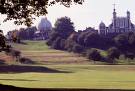
Greenwich Park: is a former hunting park in Greenwich and one of the largest single green spaces in south east London. Greenwich is the oldest enclosed Royal Park and home to a small herd of fallow and red deer..
There has been a settlement on this site since Roman times, but Greenwich will always be strongly associated with royalty. Since the land was inherited by Henry V's brother, generations of monarchs have taken this magnificient park to their hearts.
|
|
The Old Royal Observatory is at the top of the hill. This is a rather long walk so walk leisurely and take your own time.
Royal Observatory:
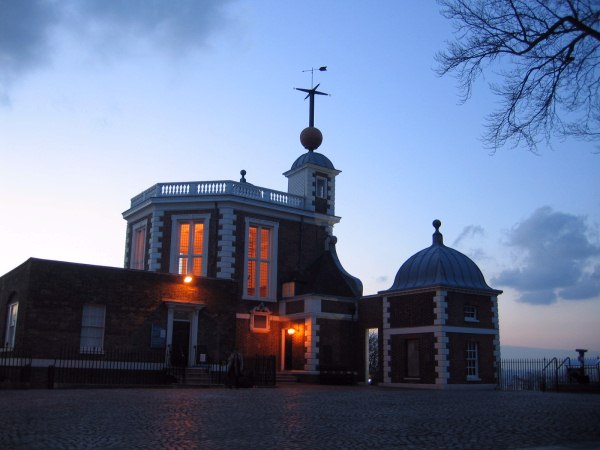
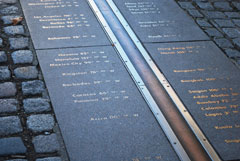
The Greenwich Royal Observatory was established by King Charles II in 1675. Greenwich was chosen back in 1884 as the Prime Meridian of the world, Longitude Zero (0° 0' 0").
Greenwich Mean Time (GMT) was until 1954 based on celestial observations made at Greenwich. Thereafter, GMT was calculated from observations made at other observatories. GMT is more properly called Universal Time at present, and is calculated from observations of extra-galactic radio sources.
Today the buildings include a museum of astronomical and navigational tools, which is part of the National Maritime Museum, including John Harrison's prize-winning longitude marine chronometer, H4.
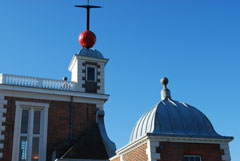
Watch the red Time Ball on top of Flamsteed House drop at 1pm every day. At 12.55pm, the time ball rises half way up the mast reaching the top at 12.58pm. At 1pm exactly, the ball drops. As the ball can be seen from the passing ships very clearly, passing ships use this signal to check time. |
|
Walk down the hill back to the town. Walk towards the National Maritime Museum. If you are tired from the walk up, look out for the bus service to take you down to the entrance of the park.
|
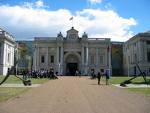
National Maritime Museum : is the leading maritime museum of the United Kingdom and may be the largest museum of its kind. It has the world's largest maritime historical reference library.
The collection of the National Maritime Museum also includes items taken from Germany after World War II, including several ship models and paintings. The museum has been criticized for possessing what has been described as "Looted art".
Next door, the Queens House, The Queen's House was refurbished in 2001. It displays art from the Museum's collection.
Timings: 10:00 am–5:00 pm
|
Take a Break. Walk down the Park Row until you arrive at The Trafalgar Tavern
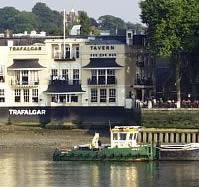
The Trafalgar Tavern
This picturesque pub, built in 1837 has become something of a local landmark. Some of its famous visitors have been Charles Dickens, Wilkie Collins and William Gladstone.
Great place to eat fish and chips looking out at the river front.
Walk along the Thames and return back to the Greenwich Pier. |
|
|